Exploring the Art of Metal Spinning for Perfect Hemispheres

Introduction to Metal Spinning and Its Applications
What is Metal Spinning?
Metal spinning transforms flat sheet metal into seamless, symmetrical shapes like hemispheres through a rotational forming process. Skilled machinists clamp a metal disc onto a spinning lathe and use specialized tools to shape it against a mandrel, creating precise forms without welds or joints. This technique excels in producing spun hemispheres, which serve as critical components in tanks, domes, and pressure vessels. Unlike stamping or deep drawn methods, metal spinning maintains material thickness uniformity, ideal for hemispherical parts that demand strength and integrity. Manufacturers favor it for its efficiency in crafting spheres, cones, and other curved metalwork. In essence, metal spinning blends artistry with engineering precision, turning raw metals into functional masterpieces that withstand demanding environments. The process minimizes waste, enhances surface finishes, and allows for intricate designs in stainless steel or aluminum hemispheres. As industries evolve, metal spinning continues to dominate for custom metalwork, offering versatility that stamping often lacks. Professionals in metalworking appreciate how it handles various metals, from brass to carbon steel, ensuring each spun hemisphere meets exact specifications. This method's adaptability makes it indispensable in modern manufacturing, where quality spun metal hemispheres drive innovation across sectors.
Historical Context and Evolution of Metal Spinning
Artisans in ancient Egypt and China first practiced rudimentary metal spinning around 1000 BC, using hand tools to form simple metal spheres and domes from copper sheets. By the Renaissance, European metalworkers refined the technique with foot-powered lathes, producing ornate hemispherical vessels for decorative and functional purposes. The Industrial Revolution propelled metal spinning forward in the 19th century, as steam engines enabled powered lathes and expanded applications to industrial tanks and pressure vessels. Pioneers like Nicholas Otto integrated spinning into mass production, evolving it from craft to engineering discipline. Today, CNC-controlled metal spinning machines dominate, allowing machinists to create complex spun hemispheres with micron-level accuracy. This evolution reflects broader metalworking advancements, shifting from manual hammering to automated processes that incorporate aluminum, stainless steel, and mild steel. Historical innovations like hydraulic assists reduced operator fatigue, paving the way for large-scale manufacturing of spheres and cones. In the 20th century, wartime demands for durable metal components accelerated adoption in aerospace and automotive sectors. Now, metal spinning stands as a cornerstone of precision metalwork, blending centuries-old techniques with cutting-edge technology to produce flawless hemispherical forms essential for contemporary industries.
Applications of Spun Hemispheres in Various Industries
Spun hemispheres power diverse sectors, from aerospace to food processing, where their seamless construction ensures reliability under pressure. In manufacturing pressure vessels, these hemispheres form tank ends and spherical segments, enhancing structural integrity against high internal forces. Stainless steel spun hemispheres dominate in chemical plants, resisting corrosion while containing reactive substances. Automotive engineers use lightweight aluminum hemispheres in fuel tanks and exhaust systems, optimizing performance without sacrificing durability. In lighting industries, polished copper hemispheres create reflectors and shades, leveraging their natural sheen for aesthetic appeal. Medical equipment benefits from biocompatible brass hemispheres in diagnostic devices, where precision shaping prevents contamination. Energy sectors deploy carbon steel spun hemispheres in wind turbine housings and solar reflectors, enduring harsh weather. Architectural applications include decorative domes and roofing elements, showcasing metal spinning's artistic side. OEM projects often specify custom spun hemispheres for prototypes, integrating seamlessly into larger assemblies. Marine industries rely on galvanized mild steel versions for boat hulls and buoys, combating saltwater exposure. Overall, spun hemispheres bridge functionality and form, enabling innovations in metalwork that span from everyday consumer goods to high-stakes engineering feats. Their versatility underscores metal spinning's role in sustainable, efficient production across global markets.
Materials Used in Spun Hemispheres
Stainless Steel: The Preferred Choice for Durability
Stainless steel reigns supreme in spun hemispheres for its unmatched corrosion resistance and tensile strength, making it ideal for harsh environments like chemical tanks and pressure vessels. Grades such as 304 and 316 stainless offer superior weldability and formability during metal spinning, yielding seamless hemispherical shapes without cracks. Manufacturers select stainless steel for its longevity in food processing equipment, where hygiene demands smooth, non-porous surfaces on domes and spheres. The material's high melting point suits high-temperature applications, from industrial furnaces to aerospace components. In metalworking, stainless steel hemispheres maintain uniform thickness, crucial for pressure vessel integrity. Its recyclability aligns with eco-friendly practices, reducing waste in sheet metal production. Compared to carbon steel, stainless variants resist rust without coatings, simplifying maintenance in marine and outdoor settings. Machinists appreciate how it polishes to a mirror finish, enhancing aesthetic value in architectural domes. For OEM needs, custom alloys provide tailored properties, like enhanced ductility for deep drawn effects. Stainless steel's dominance in spun metal hemispheres stems from balancing cost, performance, and versatility, ensuring reliable outcomes in demanding metal spinning projects across industries.
Copper and Aluminum: Lightweight Alternatives
Copper and aluminum emerge as lightweight powerhouses in spun hemispheres, offering conductivity and malleability that stainless steel can't match in electrical or thermal applications. Copper's natural antimicrobial properties shine in plumbing tanks and medical domes, where spun hemispheres prevent bacterial growth. Aluminum, with its low density, reduces weight in aerospace spheres and automotive cones, boosting fuel efficiency without compromising strength. Both metals excel in metal spinning due to their softness, allowing machinists to form intricate hemispherical profiles easily. In manufacturing, aluminum hemispheres alloyed with magnesium enhance corrosion resistance for marine environments. Copper spun parts conduct heat rapidly, ideal for heat exchangers and reflectors in lighting fixtures. These alternatives cut material costs compared to stainless, appealing to budget-conscious OEM projects. Sheet metal in these forms yields thin-walled pressure vessels that maintain pressure integrity. Metalwork with copper adds a warm patina over time, valued in decorative arts, while aluminum's anodized finishes provide modern durability. Sustainability drives their use, as both recycle efficiently, minimizing environmental impact. Spinning hemispheres from copper or aluminum thus delivers functional elegance, supporting innovations in energy-efficient designs and portable equipment.
Brass and Mild Steel: Unique Properties for Specific Applications
Brass and mild steel bring specialized traits to spun hemispheres, catering to niches where aesthetics or affordability take precedence over extreme durability. Brass, an alloy of copper and zinc, spins into golden-toned hemispheres for decorative domes and musical instruments, its acoustic resonance enhancing sound quality. Mild steel, essentially low-carbon steel, offers economic appeal for structural tanks and cones in construction, easily galvanized for rust protection. In metal spinning, brass's ductility prevents work hardening, producing smooth hemispherical surfaces for plumbing fittings. Mild steel hemispheres integrate into pressure vessels via simple welding, supporting large-scale manufacturing. These metals suit OEM customization, like engraving on brass for branded spheres or perforating mild steel for ventilation. Unlike stainless, mild steel's machinability allows quick prototyping in metalwork shops. Brass hemispheres resist dezincification in water applications, while mild steel's magnetic properties aid in electromagnetic devices. Both promote sustainability through abundant sourcing and recyclability, aligning with green metal spinning practices. Their unique blend of formability and function makes brass and mild steel indispensable for targeted applications, from artistic installations to robust industrial components.
The Metal Spinning Process Explained
Creating Perfect Hemispheres: Step-by-Step Guide
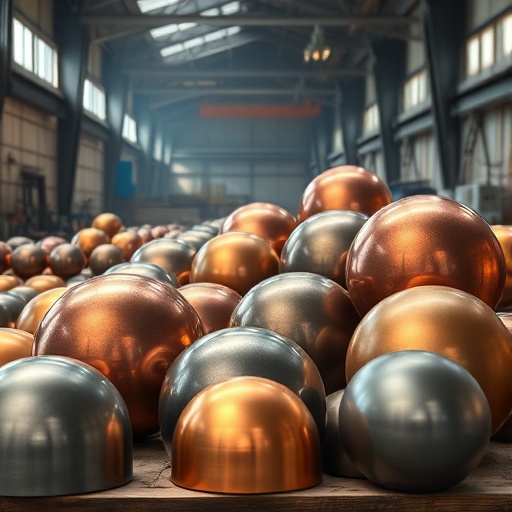
Artisans begin the metal spinning process by selecting sheet metal blanks, typically stainless steel or aluminum discs sized for the desired hemisphere diameter. They secure the blank on a lathe mandrel matching the hemispherical form, then spin it at high speeds—often 500 to 2000 RPM—to soften the metal through centrifugal force. A machinist applies pressure with a spinning tool, gradually shaping the disc into a dome, layer by layer, to avoid thinning or wrinkling. Lubricants like wax prevent galling, ensuring smooth metal flow over the mandrel. For complex spheres, multiple passes refine the curve, incorporating features like flanges for tank attachments. Heat-assisted spinning treats stubborn metals like titanium, but standard runs use room temperature for efficiency. Post-spinning, trimming removes excess material, followed by annealing to relieve stresses in the hemispherical structure. Quality checks verify wall thickness uniformity, vital for pressure vessels. This iterative process transforms flat sheets into precise spun hemispheres, blending manual skill with machine precision. Variations like power spinning accelerate production for OEM needs, while hand spinning crafts bespoke metalwork. Mastering these steps yields flawless results, from simple cones to intricate domes, powering diverse manufacturing applications.
Quality Control in Metal Spinning: Ensuring Precision
Quality control anchors metal spinning, starting with material inspections to confirm sheet metal purity and thickness for consistent hemispherical outcomes. Dimensional checks using calipers and laser scanners verify spun hemispheres meet tolerances as tight as 0.005 inches, crucial for pressure vessel safety. Non-destructive testing, like ultrasonic thickness gauging, detects subsurface flaws in stainless steel domes without compromising integrity. Surface finish evaluations ensure smoothness, preventing stress risers in spheres used for tanks. Machinists document each stage, from mandrel alignment to final trimming, to trace issues in metalwork. Automated systems in modern setups monitor spin speeds and tool pressure, alerting to deviations that could warp cones or hemispheres. Post-process heat treatments restore ductility, followed by dye penetrant tests for cracks in aluminum variants. Compliance with standards like ASME for pressure vessels mandates rigorous protocols, including burst testing on sample spun hemispheres. This meticulous approach minimizes rejects, boosts efficiency in manufacturing, and builds trust in OEM partnerships. By integrating human oversight with tech-driven metrics, quality control elevates metal spinning from craft to certified precision engineering.
Design Considerations for Spun Hemispheres
Geometry and Dimensions: Factors Influencing Design
Geometry drives spun hemisphere design, where radius and depth dictate material flow and structural performance in applications from domes to tanks. Engineers calculate draw ratios to prevent tearing in sheet metal, ensuring uniform thickness across the hemispherical curve. Dimensions influence mandrel choice; larger spheres demand robust lathes, while compact hemispheres suit high-volume metal spinning. Wall thickness, often 0.5 to 5 mm, balances weight and strength—thinner for aluminum reflectors, thicker for steel pressure vessels. Flange widths accommodate welding or bolting in assemblies, enhancing versatility. Curvature precision affects aerodynamics in conical hybrids or acoustic properties in brass spheres. Designers factor in grain direction of metals like mild steel to minimize anisotropy during spinning. Simulation software predicts stress points, optimizing geometry for deep drawn effects without secondary operations. Scalability matters for OEM projects, where modular designs allow nesting smaller hemispheres into larger spheres. Aesthetic elements, such as textured surfaces, integrate seamlessly via tool patterns. These considerations ensure spun hemispheres not only fit specifications but excel in real-world demands, fostering innovative metalwork solutions.
Integrating Pressure Vessel Requirements
Pressure vessel standards shape spun hemisphere designs, mandating seamless construction to eliminate weak seams that could fail under load. ASME codes require hydrostatic testing on completed tanks, verifying hemispherical ends withstand 1.5 times operating pressure. Material selection, like 316 stainless steel, ensures corrosion resistance in volatile environments, with spun forms distributing stress evenly across the dome. Thickness calculations follow formulas accounting for internal pressure, radius, and safety factors, preventing bulging in spheres. Integration involves precise flange matching for head-to-cylinder welds, often using backing rings for alignment. Metal spinning's advantage lies in forming near-net shapes, reducing machining that might introduce defects. For cryogenic or high-temperature vessels, alloys like carbon steel with liners accommodate thermal expansion. Certification processes include material traceability from sheet metal to finished hemisphere, ensuring compliance. Designers incorporate burst discs or nozzles without compromising the curve's integrity. This holistic approach safeguards lives and assets, making spun hemispheres pivotal in energy, pharmaceutical, and transport sectors where pressure containment is non-negotiable.
Customization for OEM Projects
OEM projects thrive on customized spun hemispheres, tailored to client specs for seamless integration into proprietary systems. Engineers collaborate early, translating CAD models into spin-friendly geometries for unique tanks or domes. Material choices, from copper for conductivity to brass for aesthetics, align with end-use demands like heat dissipation in electronics spheres. Prototyping via rapid metal spinning validates designs, iterating on dimensions to fit assembly lines. Surface treatments—polishing, powder coating, or anodizing—enhance functionality, such as UV resistance for outdoor cones. Volume scaling adjusts processes; low-run hand spinning suits boutique OEMs, while automated lines handle mass production of aluminum hemispheres. Tolerances tighten for precision fits in medical pressure vessels, with post-spin machining adding threads or ports. Sustainability features, like recycled mild steel, appeal to eco-focused clients. Documentation packages include spin parameters and test data, streamlining approvals. This bespoke service turns standard metalwork into competitive edges, empowering OEMs to innovate with reliable, high-quality spun components.
Future Trends in Metal Spinning Technology
Innovations in Metalworking Techniques
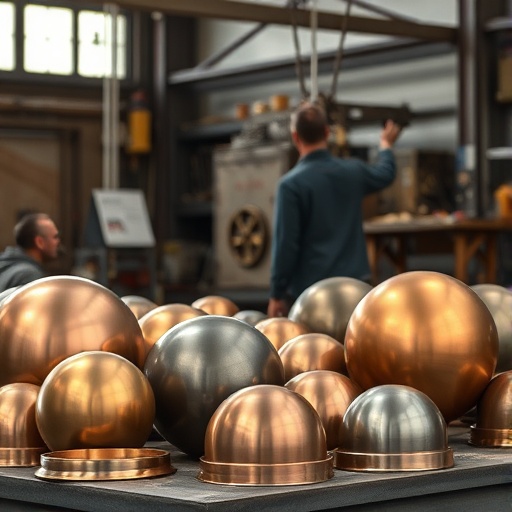
Hybrid metal spinning merges with additive manufacturing, layering 3D-printed mandrels for complex internal geometries in hemispheres unattainable by traditional methods. AI-driven controls optimize tool paths in real-time, predicting metal flow in stainless steel to eliminate defects and boost yield. Shear spinning variants push boundaries, forming ultra-thin spheres for lightweight aerospace tanks. Robotic arms automate multi-axis spinning, enabling machinists to tackle asymmetric domes with precision. Nanocoating integrations during spinning impart self-healing properties to aluminum surfaces, extending lifespan in corrosive environments. Digital twins simulate entire processes, from sheet metal blanking to final pressure vessel assembly, slashing development time. Hot spinning with induction heating handles high-strength steels, expanding options beyond mild varieties. Collaborative robots assist in finishing, polishing brass hemispheres to flawless sheens. These innovations elevate metalwork, making spun hemispheres more accessible for custom OEM innovations while enhancing efficiency in high-volume manufacturing.
Sustainability in Metal Spinning Practices
Sustainable metal spinning prioritizes recycled sheet metals, like post-consumer stainless steel, reducing virgin ore extraction and energy use by up to 70% in hemisphere production. Water-based lubricants replace oils, minimizing environmental runoff in facilities crafting pressure vessels. Energy-efficient lathes with regenerative braking cut power consumption for spinning aluminum domes. Waste heat from annealing recycles into pre-heating blanks, optimizing the metalwork cycle. Lifecycle assessments guide material choices, favoring biodegradable finishes on copper spheres. Closed-loop systems reclaim trimming scraps, feeding them back into manufacturing for zero-waste cones. Certifications like ISO 14001 drive adoption of green practices among machinists. Solar-powered factories emerge for OEM projects, lowering carbon footprints of large-scale tanks. Biodegradable mandrel materials eliminate disposal issues in prototyping. These efforts not only comply with regulations but position metal spinning as a leader in eco-friendly production, appealing to conscious markets and ensuring long-term viability for spun hemispheres.
Emerging Markets for Spun Hemispheres
Renewable energy surges demand for spun hemispheres in wind turbine nacelles and solar concentrators, where durable stainless steel domes shield electronics from elements. Electric vehicle sectors seek lightweight aluminum spheres for battery housings, spurring innovations in compact metal spinning. Medical biotech expands uses for biocompatible brass hemispheres in implant prototypes and diagnostic tanks. Space exploration calls for ultra-precise titanium variants, pushing metalwork boundaries for satellite components. Urban farming leverages copper spun parts in hydroponic systems, capitalizing on antimicrobial traits. Defense applications grow with carbon steel pressure vessels for munitions, requiring enhanced security protocols. 3D printing hybrids open niches in customizable OEM spheres for robotics. Emerging economies in Asia and Africa adopt affordable mild steel spinning for infrastructure tanks. Virtual reality training for machinists accelerates skill transfer, fueling global adoption. These markets highlight spun hemispheres' adaptability, driving economic growth and technological advancement in diverse fields.
See Also
- The Versatility of Spun Hemispheres in Pressure Vessel Design
- Why Stainless Steel is the Preferred Material for Spun Hemispheres
- Metal Spinning vs Stamping Choosing the Right Technique for Hemispheres
- The Science Behind Creating Flawless Spun Metal Hemispheres
- Transforming Steel and Aluminum into Stunning Spun Hemispheres