The Role of Metal Stamping in Creating Precision Spun Cones
Understanding Metal Stamping and Its Applications
Overview of Metal Stamping
Metal stamping is a manufacturing process that shapes and forms metal sheets into specific shapes and sizes using dies and presses. This technique employs various methods such as bending, punching, and embossing to create precise components. The versatility of metal stamping allows for the production of a wide array of parts, from simple brackets to complex components used in machinery and automotive applications. The process can handle different metals, including steel, aluminum, and brass, making it a popular choice in various industries. Metal stamping contributes significantly to the efficiency and accuracy required in today’s manufacturing landscape.
Importance in Precision Manufacturing
Precision manufacturing hinges on the ability to produce components that meet stringent specifications consistently. Metal stamping excels in this regard, offering high repeatability and accuracy. The use of precision dies ensures that each piece produced retains the same dimensions, tolerances, and finishes. This level of consistency minimizes waste, reduces the need for extensive rework, and enhances overall production efficiency. Industries that rely on precision parts, such as aerospace, automotive, and electronics, benefit immensely from the reliability of metal stamping. The process not only streamlines production but also contributes to the quality and longevity of the final products.
Key Industries Utilizing Metal Stamping
Numerous industries leverage metal stamping for its efficiency and precision. The automotive sector stands out as a primary user, relying on this technique for producing components like brackets, housings, and even body parts. The aerospace industry also utilizes metal stamping for creating lightweight yet durable parts critical for safety and performance. Electronics manufacturers depend on metal stamping for producing intricate components that fit into complex assemblies. Additionally, sectors such as construction and plumbing make use of stamped metal parts in products like roof flashings and pressure vessels. This widespread application underscores the essential role of metal stamping in modern manufacturing.
The Process of Creating Spun Metal Cones
Introduction to Metal Spinning
Metal spinning, also known as spin forming, is a technique used to create symmetrical components by shaping metal around a rotating mandrel. This process is particularly effective for producing spun metal cones, which are essential in various applications. Unlike traditional metal forming methods, metal spinning allows for the creation of seamless and uniform shapes with minimal material waste. The technique can accommodate a wide range of diameters, making it suitable for small-scale to large-scale production runs. Metal spinning combines artistry and engineering, resulting in high-quality spun metal products that meet diverse industrial needs.
Step-by-Step of Spun Cone Production
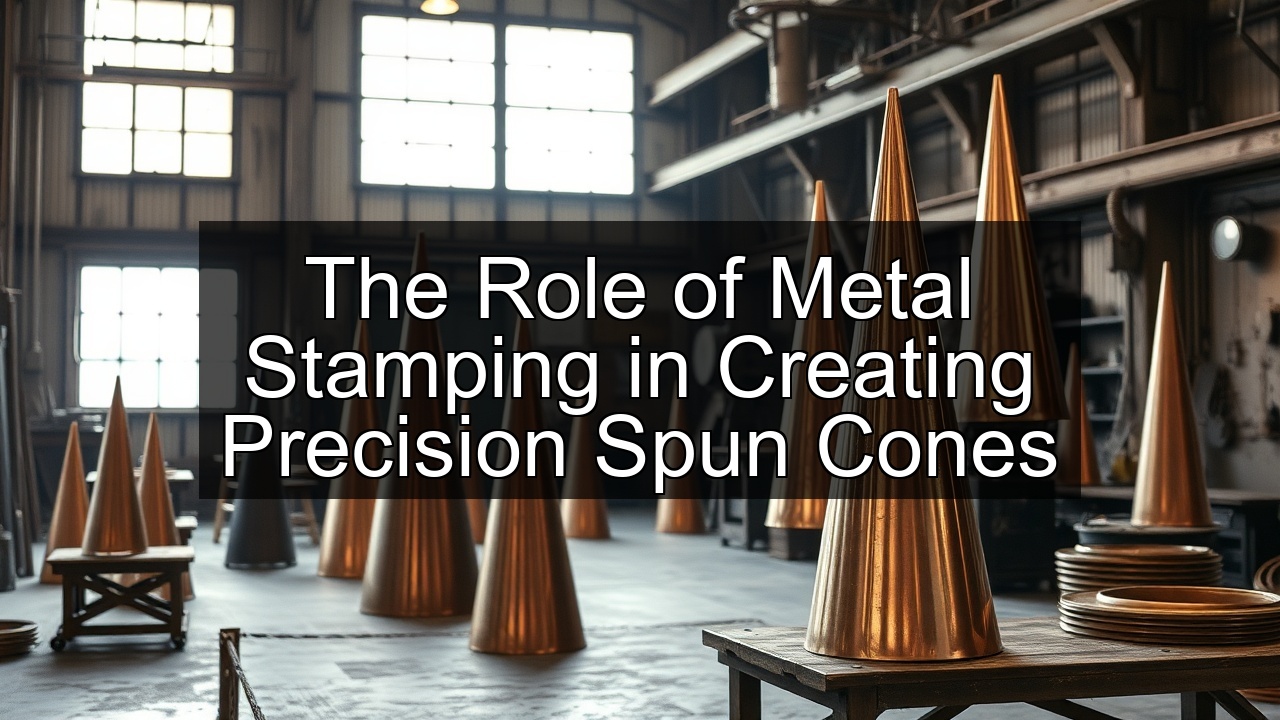
The production of spun metal cones involves several key steps. First, manufacturers select the appropriate metal sheet, often aluminum or steel, based on the desired properties of the final product. Next, the metal sheet is cut into a circular blank, which serves as the starting point for the spinning process. As the blank spins on a lathe, a tool shapes the metal against a mandrel, gradually forming the cone shape. This shaping process may require several passes to achieve the desired thickness and finish. Finally, once the cone reaches the specified design, additional processes like welding may be applied to create features such as flanges or joints. The result is a high-quality spun cone ready for various applications.
Materials Used in Spun Metal Cones
Manufacturers commonly use materials such as spun aluminum and stainless steel for creating spun metal cones. Aluminum, known for its lightweight and corrosion-resistant properties, is ideal for applications like roof flashings and decorative elements. Stainless steel offers enhanced strength and durability, making it suitable for pressure vessels and industrial tanks. Other materials may also be utilized depending on the specific requirements of the application, including copper for aesthetic purposes or titanium for high-performance environments. The choice of material directly influences the cone's performance, longevity, and suitability for its intended use.
Applications of Spun Metal Cones
Spun Aluminum in Roof Flashings
Spun aluminum cones play a critical role in the construction industry, particularly in roof flashings. These components provide a watertight seal at roof intersections, preventing water infiltration and damage. The lightweight nature of aluminum makes it easy to install, while its resistance to corrosion ensures a long-lasting solution. Manufacturers can customize spun aluminum flashings to fit various roof designs and slopes, enhancing their versatility. This adaptability allows contractors to address specific project requirements efficiently, making spun aluminum a preferred choice for roof flashings in residential and commercial buildings alike.
Use in Pressure Vessels and Tanks
Spun metal cones are crucial in the production of pressure vessels and tanks, where they serve as end caps or conical sections. These components must withstand high pressure and temperature, making the choice of material and manufacturing method vital. Metal spinning allows for the creation of seamless, strong cones that can endure the demanding conditions within pressure vessels. Industries such as oil and gas, chemicals, and food processing rely on these spun cones to ensure safety and efficiency in their operations. The precision achieved through metal spinning further enhances the reliability of these critical components.
Customization for Funeral Urns and Build to Order Solutions
The market for funeral urns has seen a rise in demand for customized designs, and spun metal cones offer an elegant solution. Manufacturers can create unique, personalized urns tailored to individual preferences. The metal spinning process allows for intricate designs and variations in diameter, giving customers a range of options to choose from. Moreover, the ability to produce these urns as build to order solutions ensures that families receive products that reflect their loved ones’ lives and legacies. This customization aspect highlights the versatility of spun metal cones beyond traditional industrial applications.
Benefits of Using Spun Metal Cones in Various Industries
Precision and Consistency in Production
Spun metal cones deliver unmatched precision and consistency, essential attributes in manufacturing. The metal spinning process produces components with tight tolerances, ensuring that each cone meets exact specifications. This level of accuracy reduces the likelihood of defects and minimizes the need for rework, leading to cost savings and improved efficiency. Industries that require high-quality components, such as aerospace and automotive, benefit from the reliability of spun metal cones. The consistent quality not only enhances product performance but also fosters customer trust in the final products, reinforcing the importance of precision in manufacturing.
Cost-Effectiveness of Metal Stamping vs. Traditional Methods
Metal stamping, combined with metal spinning, presents a cost-effective alternative to traditional manufacturing methods. The efficiency of these processes minimizes material waste and reduces labor costs, making them economically viable for large production runs. Metal stamping allows for quick setup and high-speed production, which is crucial for meeting market demands. By integrating metal stamping with spun metal cones, manufacturers can achieve a balance of quality and affordability. This cost-effectiveness appeals to a wide range of industries, enabling them to produce high-quality components without breaking their budgets.
Versatility in Diameter and Design Options
The versatility of spun metal cones extends to their diameter and design options, accommodating a broad spectrum of applications. Manufacturers can easily adjust the dimensions of spun cones to meet specific project requirements, whether for small decorative items or large industrial components. Additionally, the design possibilities are virtually limitless, allowing for custom shapes and features that enhance functionality. This adaptability makes spun metal cones suitable not only for traditional uses but also for innovative applications across various industries. The ability to customize ensures that manufacturers can meet evolving market needs effectively.