Unlocking the Secrets of Titanium CNC Machining for Precision Applications
Understanding Titanium CNC Machining
Overview of CNC Machining
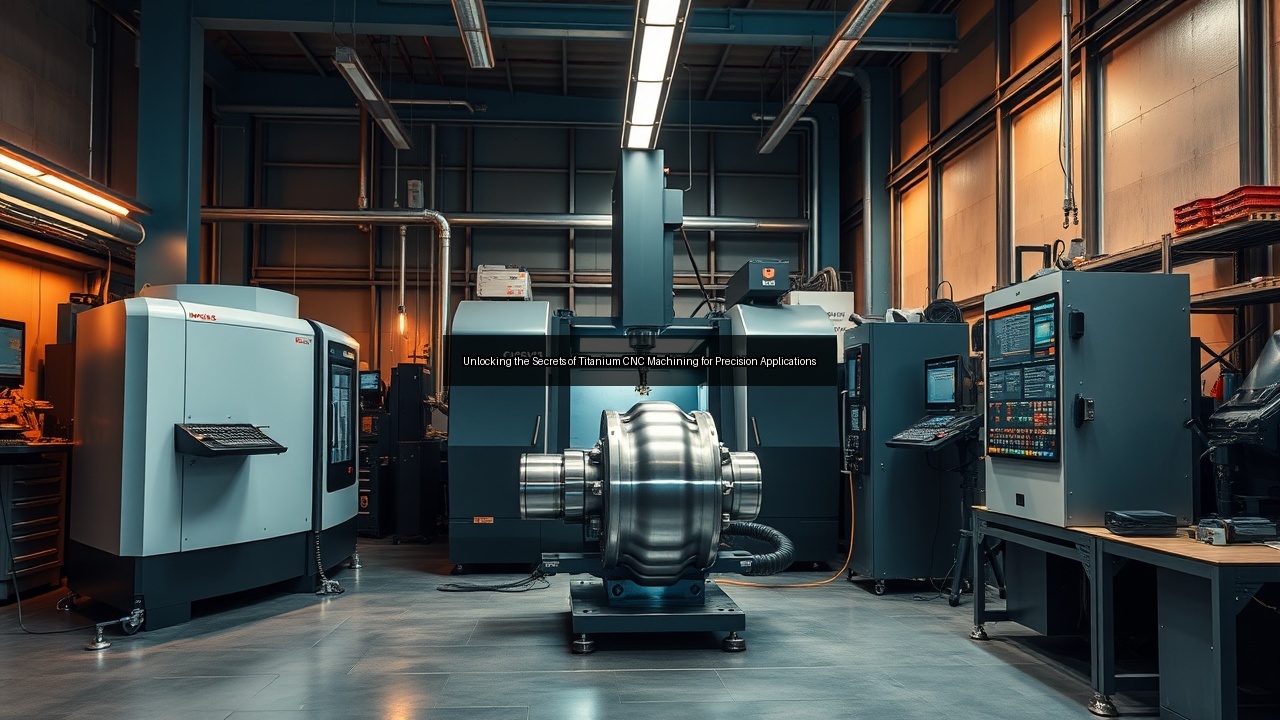
CNC machining revolutionizes metalworking by automating precision cuts through computer-controlled tools. Engineers program machines to shape raw materials like titanium into intricate parts with tolerances down to microns. This process starts with a digital design in CAD software, which translates into G-code instructions for mills, lathes, or routers. In titanium CNC machining, operators select rigid machines to handle the metal's toughness, ensuring every pass removes material efficiently without vibrations that could ruin surfaces. Modern CNC setups integrate multi-axis capabilities, allowing complex geometries in one setup. Factories rely on this for high-volume production, where consistency trumps manual labor's variability. Titanium's demand in aerospace pushes CNC evolution, incorporating coolant systems to combat heat buildup during cuts. Skilled machinists oversee operations, adjusting parameters for optimal results. This technology not only boosts speed but also minimizes waste, making it ideal for custom titanium machining projects that require exact specifications.
Characteristics of Titanium
Titanium stands out in manufacturing for its exceptional strength-to-weight ratio, corrosion resistance, and biocompatibility. This lightweight metal, symbolized as Ti on the periodic table, boasts a density about half that of steel yet matches or exceeds its durability. Its high melting point, around 1,668°C, suits extreme environments, while natural oxide layers shield it from rust in harsh conditions. However, titanium's low thermal conductivity poses challenges in machining, as heat concentrates at the cutting edge, risking tool wear. In titanium CNC machining, this property demands specialized lubricants to dissipate warmth effectively. Titanium also exhibits elasticity that absorbs shocks, perfect for dynamic applications. Extracted from ores like ilmenite, pure titanium rarely suffices alone; alloys enhance its traits for industrial use. Manufacturers prize its non-magnetic nature for electronics and hypoallergenic qualities in medical fields. Despite higher costs, titanium's longevity justifies investment in sectors demanding reliability over economy.
Why Choose Titanium for Precision Applications
Engineers opt for titanium in precision applications because it delivers unmatched performance where failure isn't an option. In aerospace components, titanium's fatigue resistance ensures parts withstand millions of cycles without cracking. Medical implants benefit from its compatibility with human tissue, reducing rejection risks in surgeries. For automotive parts, titanium cuts weight to boost fuel efficiency while maintaining structural integrity under high speeds. Precision titanium machining unlocks these benefits by achieving tight tolerances that other metals can't match without distortion. Unlike stainless steel, titanium avoids brittleness in corrosive settings, extending service life. Its ability to join via welding or adhesives further simplifies assembly in complex designs. Industries choose titanium CNC machining for prototypes that evolve into production runs, as the material's predictability aids iterative testing. Cost savings emerge over time through reduced maintenance and downtime. Ultimately, titanium empowers innovations that push engineering boundaries, from deep-sea submersibles to satellite housings.
Key Titanium Alloys in CNC Machining
Exploring Ti6Al4V: The Workhorse Alloy
Ti6Al4V dominates titanium CNC machining as the go-to alloy for demanding projects, blending 6% aluminum and 4% vanadium with 90% titanium. This alpha-beta alloy offers superior strength, reaching 900-1000 MPa tensile values, ideal for load-bearing parts. Aerospace firms favor it for turbine blades due to excellent creep resistance at elevated temperatures. In medical realms, Ti6Al4V forms hip replacements and dental fixtures, leveraging its osseointegration properties. Machinists appreciate its balanced machinability, though they must use sharp carbide tools to counter work-hardening. Heat treatment refines its microstructure for enhanced ductility. Widely available, Ti6Al4V supports cost-effective custom titanium machining without sacrificing quality. Its weldability aids repairs in field applications. Engineers specify this alloy for prototypes, knowing it scales seamlessly to full production. Ongoing research refines Ti6Al4V variants, incorporating trace elements for even better corrosion resistance in marine environments.
Comparing Titanium Alloys: Strength and Machinability
Titanium alloys vary widely in strength and machinability, guiding selections for specific CNC tasks. Ti6Al4V leads in versatility, offering high strength with moderate machinability that requires controlled speeds to avoid galling. Grade 5, another name for Ti6Al4V, outperforms commercially pure titanium (CP Ti) in rigidity but demands more robust setups. CP Ti excels in formability and corrosion resistance, suiting chemical processing, yet its softness eases machining at the expense of structural power. Beta alloys like Ti-10V-2Fe-3Al provide ultra-high strength above 1,200 MPa through aging treatments, though their poor machinability increases tool costs. Alpha alloys, such as Ti-5Al-2.5Sn, prioritize weldability and stability at cryogenic temperatures. When comparing, machinists evaluate hardness via Rockwell scales; higher values signal tougher cuts. Titanium alloys generally lag steel in machinability ratings, necessitating specialized feeds. Strength metrics, like yield points, dictate use in high-stress zones. Selecting the right one optimizes titanium machining outcomes, balancing performance against processing hurdles.
Heat-Treatable vs. Non-Heat-Treatable Alloys
Heat-treatable titanium alloys transform through thermal processes to boost mechanical properties, unlike their non-heat-treatable counterparts that rely on inherent compositions. Alpha-beta types like Ti6Al4V respond to annealing or solution treating, dissolving phases for refined grain structures that enhance toughness. Solution treatment at 900-950°C followed by aging precipitates strengthening agents, elevating hardness without brittleness. This versatility suits aerospace where parts endure varying loads. Non-heat-treatable alloys, mainly alpha grades like Ti-8Al-1Mo-1V, maintain stability across temperatures, resisting overaging in service. They machine more predictably since properties don't fluctuate post-processing. Manufacturers choose heat-treatable options for adjustable strength in titanium CNC machining, allowing customization per application. Non-heat-treatable variants shine in cryogenic or high-heat scenarios, like rocket nozzles. Processing heat-treatable alloys demands vacuum furnaces to prevent contamination, adding steps but yielding superior results. Comparing both, heat-treatable alloys offer broader property tuning, while non-heat-treatable ensure consistency in volume production.
Techniques and Processes in Titanium Machining
CNC Machining vs. Additive Manufacturing
CNC machining subtracts material from titanium blocks for precise, finished parts, contrasting additive manufacturing's layer-by-layer buildup via 3D printing. In titanium CNC machining, mills carve designs from solid stock, achieving smooth surfaces and tight tolerances ideal for functional prototypes. Additive methods, like selective laser melting, fuse titanium powder into complex shapes unattainable by subtraction, reducing waste in intricate geometries. However, CNC excels in speed for simpler forms, while 3D printing suits low-volume, high-customization runs. Post-processing often blends both: printed near-net shapes undergo CNC finishing for accuracy. Titanium's reactivity challenges additive processes, requiring inert atmospheres to avoid defects. CNC demands upfront tooling investments but scales efficiently. For machinability, CNC handles titanium work better with established parameters, whereas additive struggles with porosity in dense alloys like Ti6Al4V. Industries weigh costs: CNC for reliability, additive for innovation. Hybrid approaches emerge, combining strengths for aerospace components that demand both intricacy and precision.
Essential Machining Techniques: Drilling and Milling
Drilling and milling form the backbone of titanium machining, each tackling specific challenges in creating holes and contours. Drilling pierces titanium with twist bits or indexable inserts, using peck cycles to clear chips and prevent binding from the metal's gummy nature. Coolants flood the zone to manage heat, as titanium's poor conductivity spikes temperatures, dulling tools rapidly. Milling employs end mills or face mills for flat surfaces and pockets, favoring climb milling to reduce forces on the workpiece. In titanium CNC machining, rigid setups minimize deflection, ensuring dimensional accuracy. Operators select coated carbide tools for longevity, sharpening edges to combat work-hardening. Drilling demands low thrust forces to avoid delamination in thin sections, while milling benefits from high-pressure coolant for deep cuts. Both techniques integrate multi-tool changers in modern CNC for efficiency. Mastering these elevates machined titanium parts' quality, supporting applications from engine mounts to surgical tools. Continuous monitoring via sensors optimizes runs, cutting cycle times.
Optimizing Feed Rates and Cutting Speeds
Optimizing feed rates and cutting speeds unlocks efficient titanium CNC machining by balancing productivity with tool life. Feed rate, measured in inches per minute, dictates material removal; too aggressive values cause chatter, while conservative ones drag cycles. For titanium, start at 0.002-0.005 inches per tooth, adjusting based on alloy hardness—Ti6Al4V tolerates higher than pure Ti. Cutting speeds range 30-60 surface feet per minute, lower than aluminum to avert rapid wear from heat localization. Machinists use spindle load meters to fine-tune, ramping speeds gradually. Coolant choice matters: straight oils for low-speed drilling, water-based for milling to flush debris. Software simulates parameters, predicting outcomes before runs. In practice, titanium work demands experimentation per setup, as machine rigidity influences ideals. Proper optimization slashes costs by extending tool intervals and minimizing scrap. Advanced CNC controls automate adjustments, enhancing precision titanium machining for high-stakes industries.
Applications of Titanium in Various Industries
Aerospace and Defense
Aerospace and defense sectors harness titanium CNC machining for components that endure extreme stresses. Jet engine compressors use Ti6Al4V forgings, machined to precise airfoil shapes for optimal airflow and fuel efficiency. Landing gear struts benefit from titanium's fatigue resistance, withstanding repeated impacts during takeoffs and landings. In defense, missile casings and armor plates leverage the metal's ballistic protection without added weight, crucial for agile aircraft. Satellites incorporate titanium frames for thermal stability in space vacuums. Custom titanium machining crafts one-off parts like drone propellers, where CNC ensures aerodynamic accuracy. Manufacturing processes integrate non-destructive testing post-machining to verify integrity. Titanium's corrosion resistance shines in marine-based defense, like submarine periscopes. Innovations push boundaries, such as hypersonic vehicle skins that demand heat-treatable alloys. These applications underscore titanium's role in national security and exploration, driving investments in advanced machining services for titanium.
Medical Applications: Implants and Devices
Medical fields rely on titanium machining for implants and devices that integrate seamlessly with the body. Hip and knee replacements use CNC-machined Ti6Al4V stems, contoured for bone in-growth to promote healing. Dental implants feature threaded titanium posts, precision-drilled for stability in jawbone fixtures. Surgical instruments, like forceps and retractors, demand sterile, lightweight titanium handles that resist autoclaving damage. Pacemaker casings employ pure titanium for biocompatibility, hermetically sealed via machined grooves. Custom titanium machining tailors prosthetics to patient scans, enhancing fit and function. Bioprinting hybrids with additive manufacturing refine complex joint models before final CNC polishing. Titanium's non-toxicity minimizes allergic reactions, a edge over stainless alternatives. Regulatory standards guide processes, ensuring surface finishes below 0.8 microns for tissue compatibility. These applications transform lives, with ongoing research exploring porous structures for drug delivery in implants.
Automotive Innovations Using Titanium
Automotive innovations exploit titanium machining to lighten vehicles and amp performance. Exhaust systems in sports cars use titanium mufflers and pipes, CNC-milled for reduced backpressure and weight savings up to 40% over steel. Connecting rods in high-rev engines adopt Ti6Al4V for superior strength, machined with tight tolerances to handle 10,000 RPM without failure. Suspension springs benefit from titanium's elasticity, cutting unsprung mass for sharper handling. Electric vehicle battery enclosures incorporate titanium frames for crash protection and thermal management. Custom titanium machining prototypes lightweight wheels, balancing aesthetics with durability. Manufacturing scales these for luxury lines, where premium materials justify costs. Titanium's heat resistance suits turbocharger housings, enduring 800°C exhaust flows. Innovations like 3D-printed titanium valves reduce inertia in Formula 1 racers. These uses propel efficiency and speed, aligning with sustainability goals through longer-lasting parts.
Choosing the Right Machining Services for Titanium
Finding Expert Machinists for Custom Titanium Machining
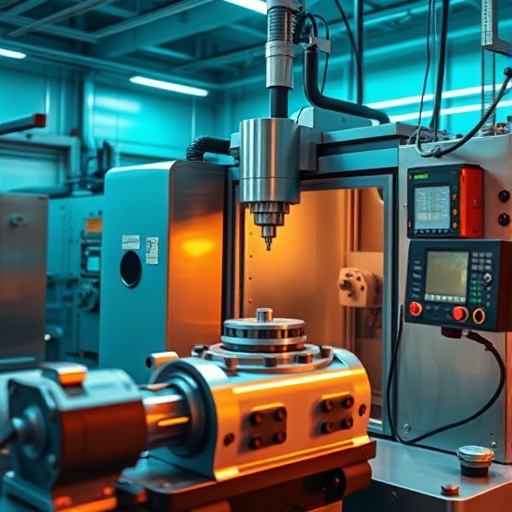
Finding expert machinists for custom titanium machining starts with verifying certifications like ISO 9001 and AS9100 for quality assurance. Look for shops with dedicated titanium CNC cells, equipped with high-rigidity machines and vacuum fixturing to handle the metal's demands. Experienced machinists boast portfolios of aerospace or medical projects, showcasing proficiency in Ti6Al4V programming. Consult references to gauge on-time delivery and problem-solving in tricky setups. Facilities offering in-house metallurgy support refine alloy choices for your specs. Custom titanium machining thrives on communication; select partners with CAD/CAM expertise for seamless file transfers. Tour the shop to assess tool inventories—carbide end mills and flood coolants signal readiness. Pricing should reflect value, not just hourly rates, factoring scrap minimization. Building long-term ties with such experts streamlines iterations from prototype to production, ensuring your vision materializes precisely.
Evaluating Machining Services for Precision Titanium Machining
Evaluating machining services for precision titanium machining involves scrutinizing capabilities against your needs. Assess equipment: 5-axis CNC mills handle complex contours, vital for intricate titanium parts. Check tolerances—shops claiming ±0.0005 inches prove mettle through CMM inspections. Review software proficiency in hyperMILL or Mastercam for efficient toolpaths that preserve surface integrity. Service breadth matters; top providers offer from raw stock sourcing to anodizing finishes. Evaluate turnaround: rush jobs demand robust scheduling without quality dips. Cost analysis weighs per-part pricing against volume discounts, mindful of titanium's premium. Client testimonials reveal reliability in handling machinability issues like chip evacuation. Sustainability practices, such as coolant recycling, appeal in eco-conscious sectors. Partner with services that invest in training, keeping machinists ahead on titanium trends. This due diligence secures partners who deliver precision titanium machining that meets regulatory and performance benchmarks.
Future Trends in Titanium CNC Machining
Future trends in titanium CNC machining point to smarter, greener processes that amplify efficiency. AI-driven controls will predict optimal feed rates and cutting speeds in real-time, adapting to tool wear for flawless runs. Hybrid systems merging CNC with additive manufacturing will produce near-net titanium parts, slashing material use by 30%. Advances in cryogenic cooling, using liquid nitrogen, will extend tool life in titanium work, enabling higher speeds without heat damage. Nanocoated tools promise better machinability, reducing friction in alloys like Ti6Al4V. Sustainability pushes recycled titanium powder integration, lowering mining impacts. Digital twins simulate entire workflows, minimizing prototypes. For applications of titanium, expect growth in biomedical via personalized implants machined from patient data. Quantum computing may optimize alloy designs for superior strength. These evolutions will democratize access to machining services for titanium, fostering innovation across industries while upholding precision standards.
See Also
- From Drilling to Milling Discover the Versatile Applications of Titanium
- Why Titanium Alloys are Game-Changers for Machinists in the Industry
- Ti vs Stainless Which Material Reigns Supreme in CNC Machining
- 3D Printing and Titanium CNC Machining A Symbiotic Relationship
- Navigating the Challenges of Machining Titanium for Custom Projects